Why Can't I Stop Worrying About My Pet?
Understanding Pet-Related OCD, Health Anxiety, and the Search for Certainty
There's a moment many pet owners don't talk about.
Your dog seems a little quieter than usual.
Maybe your cat didn't come running for breakfast the way she normally does.
Maybe your dog coughed once.
Maybe they slept longer than usual.
Nothing dramatic.
Nothing that would necessarily make someone else worry.
But something catches your attention.
And before you know it, your mind is off and running.
You start watching more closely.
You replay the last few days in your head.
You wonder if you've missed something.
You Google a symptom.
Then another.
Then somehow you're reading a veterinary forum at 11:30 at night, convinced you've overlooked a life-threatening condition.
By the next morning, you're trying to decide whether you should call the vet.
Again.
If this sounds familiar, you're not alone.
And contrary to what you might be telling yourself, this isn't necessarily a sign that you're "too attached" to your pet or that you worry too much.
Sometimes it's a sign that OCD has quietly attached itself to something you love.
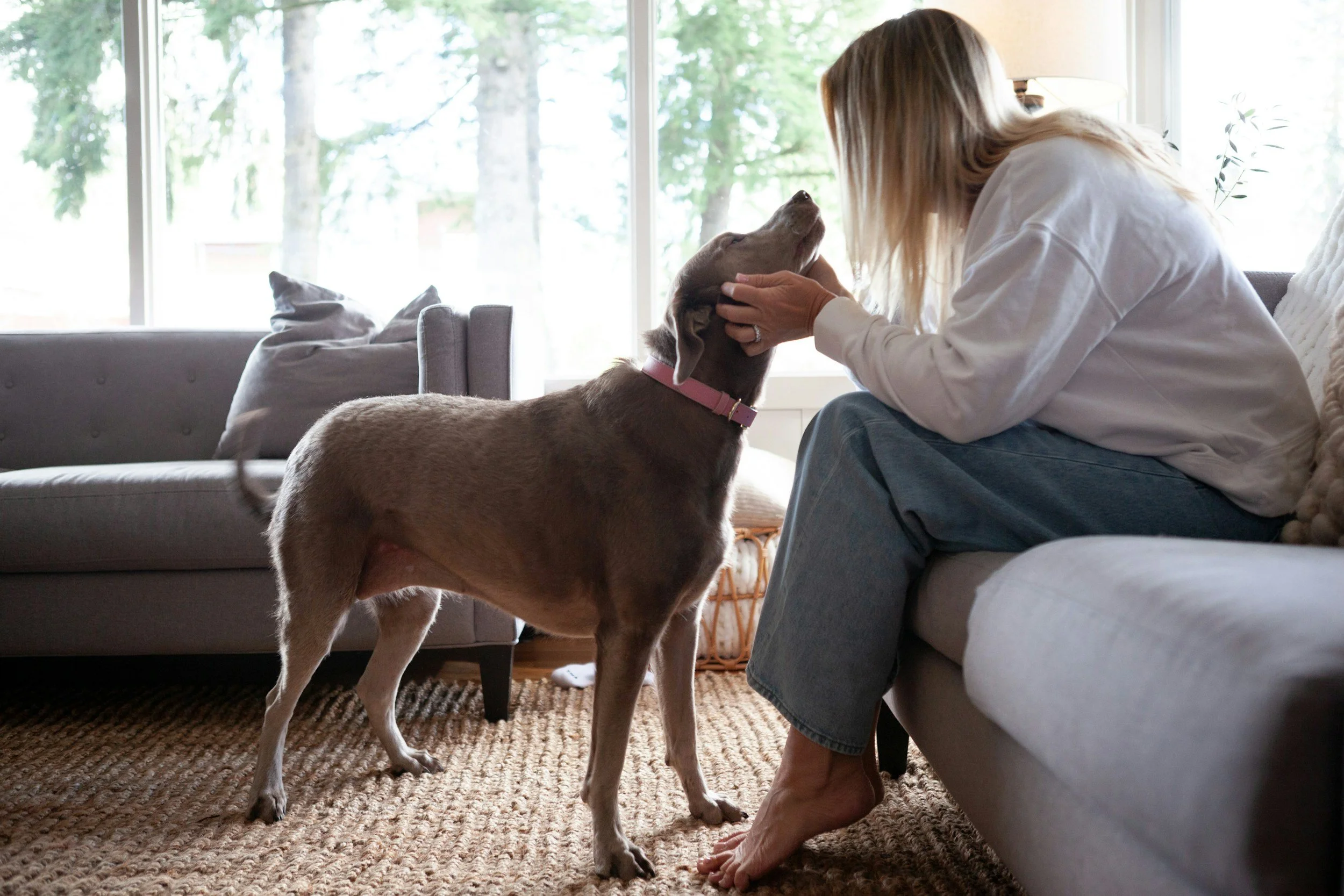
The problem isn't how much you love your pet. The problem is when OCD convinces you that love requires certainty.
What's Actually Happening
One of the things that makes OCD so confusing is that it rarely attaches itself to things we don't care about.
It goes after the things that matter most.
Our relationships.
Our values.
Our children.
Our health.
And sometimes, our pets.
That's why pet-related OCD can be so difficult to recognize.
On the surface, it looks responsible.
Of course you care if your dog is sick.
Of course you want to make sure your cat is okay.
Of course you pay attention when something seems different.
Those are all normal parts of loving an animal.
The problem isn't the concern.
The problem is what happens when concern turns into a relentless search for certainty.
Because that's where OCD lives.
Not in the love.
In the doubt.
Why This Feels So Intense
What makes this especially hard is that pets occupy a unique place in our lives.
They depend on us.
They can't tell us exactly what's wrong.
There's no way to ask your dog:
"Are you feeling okay today?"
and get a definitive answer.
So uncertainty is built into the relationship from the beginning.
Most people can tolerate that uncertainty.
People with OCD often can't.
Or more accurately, their brains become convinced they shouldn't have to.
The mind starts generating questions:
What if she's in pain?
What if I'm missing the signs?
What if I wait too long?
What if something happens and I could have prevented it?
Those questions feel important.
Responsible, even.
But the longer OCD is running the show, the less those questions become about your pet and the more they become about your own discomfort with uncertainty.
What You Might Notice
Over time, you may find yourself watching your pet in a way that feels less like care and more like surveillance.
You notice every behavior change.
You monitor eating habits.
You check breathing.
You compare today's behavior to yesterday's.
You seek reassurance from your partner, your family, your veterinarian, or the internet.
And each time you get an answer, there's relief.
For a little while.
Then another doubt appears.
Another possibility.
Another reason to check.
That's the part that often catches people off guard.
Because the goal was never really information.
The goal was relief.
And relief never lasts very long when OCD is asking the questions.
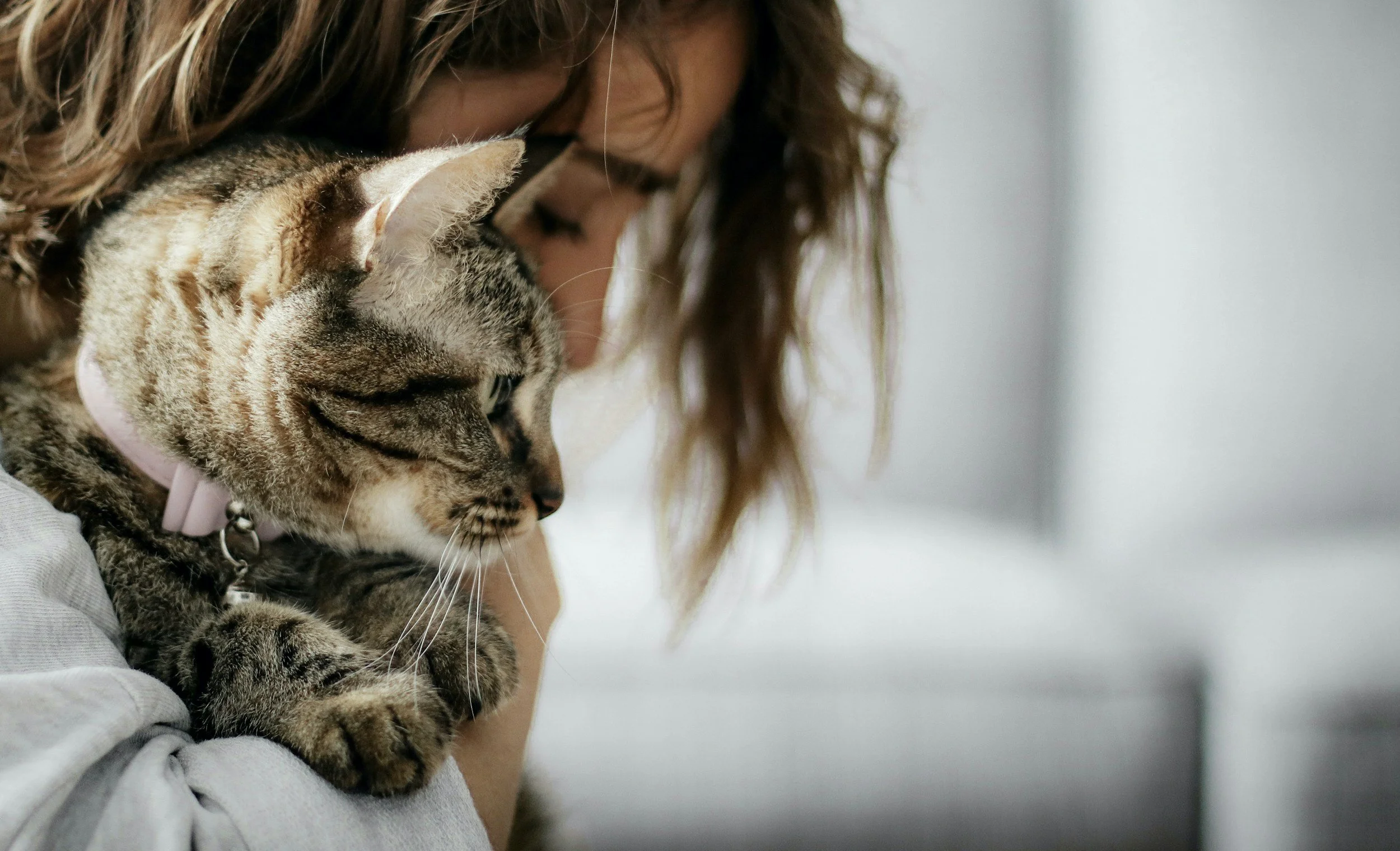
OCD often targets the things we care about most—not because they're dangerous, but because they matter.
The Part No One Tells You
One of the things I hear most often from people struggling with OCD is:
"I know this sounds ridiculous."
And then they tell me something that doesn't sound ridiculous at all.
It sounds exhausting.
Because living with OCD often means carrying a level of responsibility that no human being could realistically fulfill.
You start acting as though it is your job to prevent every possible bad outcome.
To catch every illness.
To notice every symptom.
To make every perfect decision.
And when you care deeply about your pet, that burden can become incredibly heavy.
Not because you're doing anything wrong.
Because you're trying to achieve something that's impossible.
Absolute certainty.
What Actually Helps
This is where treatment starts to feel a little counterintuitive.
Most people assume the answer is more information.
More monitoring.
More certainty.
More reassurance.
But those things are usually what keep the cycle alive.
Instead, we begin helping your brain learn something different:
That uncertainty is uncomfortable, but not dangerous.
That you can love your pet deeply without constantly monitoring for disaster.
That you can be a responsible pet owner without becoming trapped in endless vigilance.
This is the work we do in Exposure and Response Prevention (ERP).
Not by convincing yourself that nothing bad will ever happen.
But by learning that you can tolerate not knowing.
And surprisingly, that's where people often find the most freedom.
What It's Like to Work on This
If you were sitting across from me and said:
"I know this sounds ridiculous, but I can't stop checking on my dog..."
I'm probably going to smile.
Not because I'm making fun of you.
Because I've heard versions of this story many times before.
And because I know how much shame people carry around it.
I'm not going to tell you you're overreacting.
And I'm definitely not going to tell you to stop loving your pet.
What we're going to look at together is whether OCD has quietly turned love into vigilance.
Because those are two very different experiences.
We'll get curious about the doubts that keep showing up.
We'll identify the things you're doing to get temporary relief.
And we'll start helping your brain learn that caring for your pet and chasing certainty are not the same thing.
Because when those two things get untangled, people often experience an enormous sense of relief.
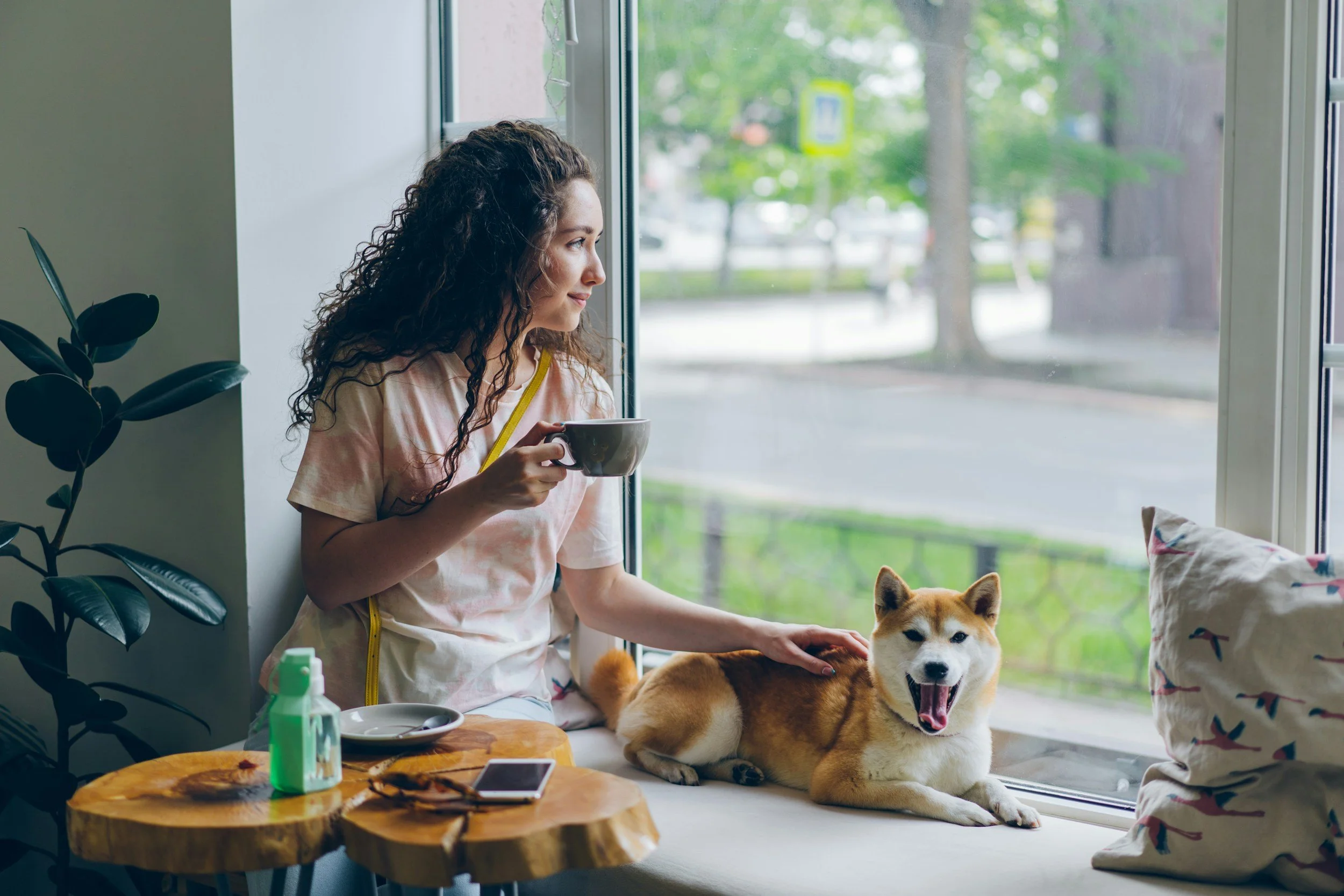
Recovery isn't about caring less. It's about learning to care without carrying the impossible responsibility of preventing every bad outcome.
Final Thought
If you've found yourself lying awake worrying about your pet, checking for symptoms, researching illnesses, or wondering whether you're missing something important, you're not alone.
And you're not a bad pet owner.
In fact, the opposite is usually true.
The people who struggle most with this are often incredibly loving, conscientious, and devoted.
The problem isn't the love.
The problem is what OCD does with it.
The good news is that this pattern can change.
You can learn how to care deeply without carrying the impossible responsibility of preventing every bad thing that could ever happen.
If you're tired of overthinking, second-guessing yourself, or feeling stuck in the same patterns, know that change is possible.
Through structured, evidence-based therapy, I help women navigate anxiety, OCD, and life's turning points with greater clarity, confidence, and self-trust.
Learn more about working together here.